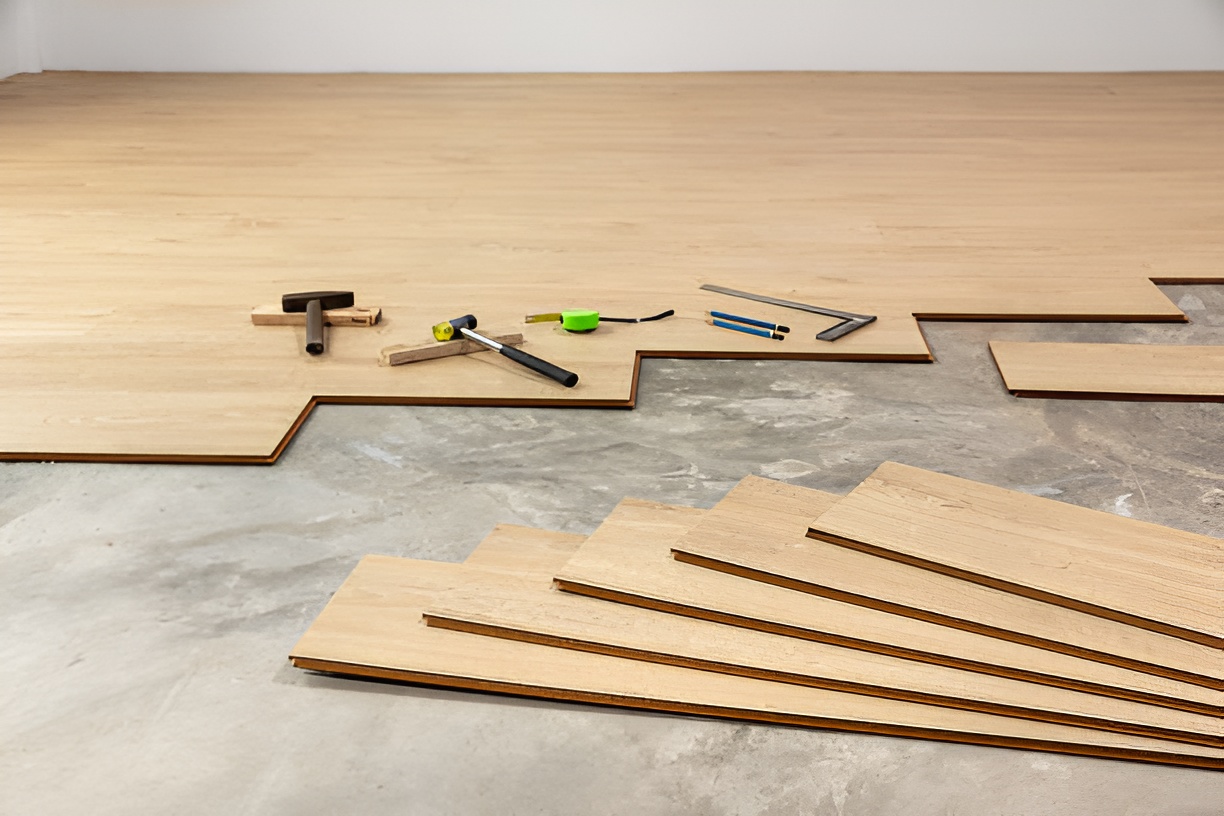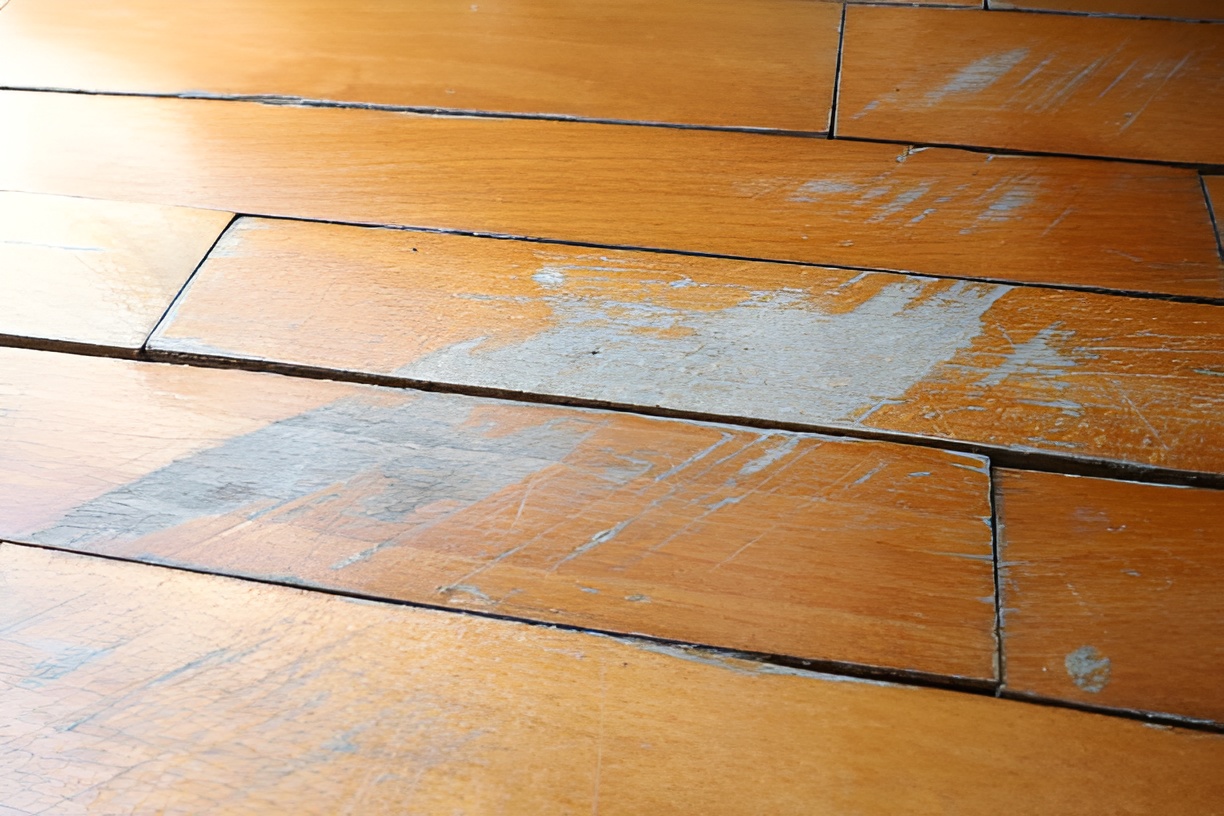
- Identify the scratch type first – Light scratches affect only the surface, while deep scratches reach the laminate core, determining the repair method.
- Quick fixes work for light scratches – Use markers, wax sticks, or household items like toothpaste, walnuts, or olive oil for minor damage.
- Deep scratches may need filler or plank replacement – Laminate floor filler or replacing the damaged plank can restore deep scratches effectively.
- Preventive measures matter – Furniture pads, rugs, regular cleaning, and pet nail maintenance help reduce future scratches.
- Restore floor shine after repairs – Clean, buff, and apply laminate polish carefully to bring back a smooth, polished look.
- Avoid common mistakes – Don’t use abrasive pads, excessive water, or mismatched repair materials to prevent worsening the damage.
- Know when to call a professional – Large, deep, or multiple scratches may require expert repair for a seamless and long-lasting result.
A favored option for many homeowners, laminate flooring is known for its affordability, resilience, and relatively simple upkeep. However, even the most resilient laminate can get scratched over time. Whether it’s from pets, furniture, or everyday wear and tear, scratches can make your floors look worn and tired.
The good thing is that most scratches, whether light or deep, can be repaired with a little know-how and the right tools. In this article, we’ll explore practical solutions and tips for restoring your laminate floors to their original shine.
What Causes Scratches on Laminate Flooring?
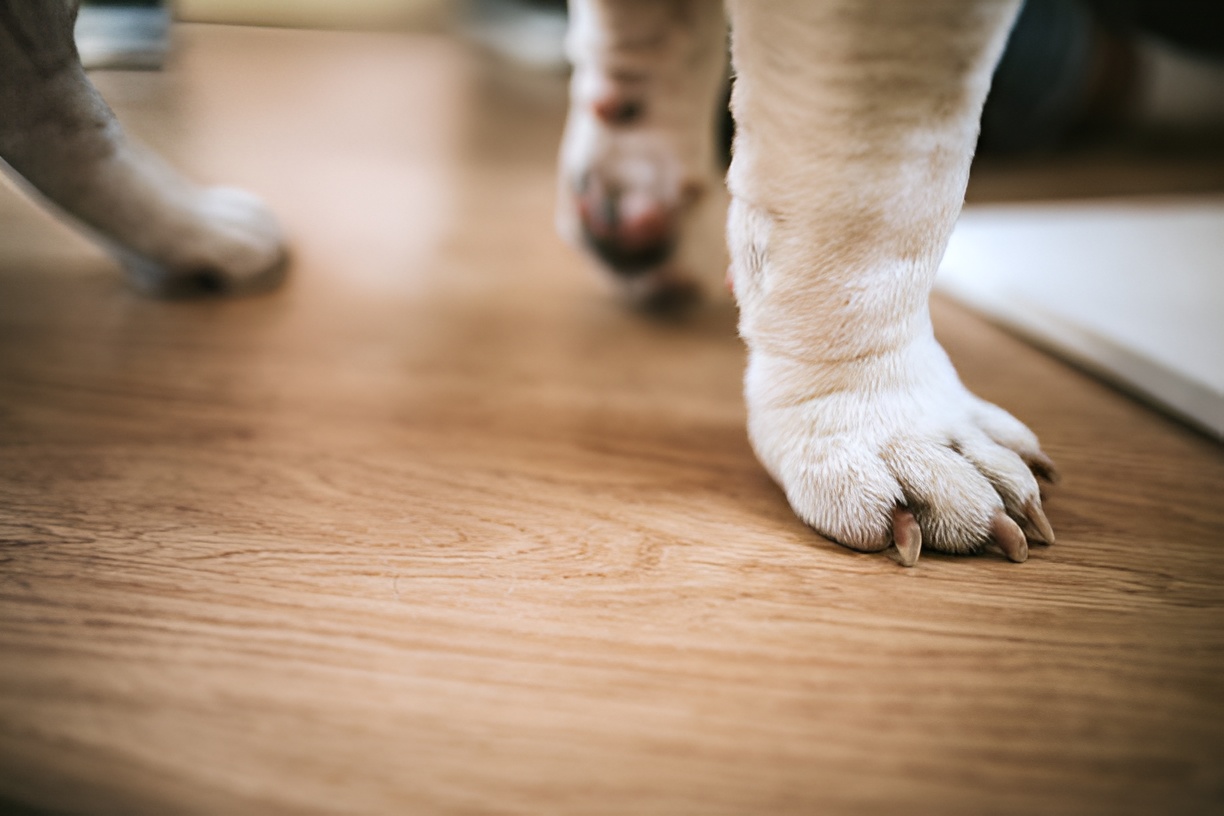
Before diving into the fixes, it’s helpful to understand what causes scratches in the first place. Common culprits include:
- Moving heavy furniture without protective pads
- Dropping sharp objects
- Pets with long nails
- Sand and dirt tracked inside from shoes
- Everyday foot traffic
Knowing what causes scratches can help you prevent future damage and choose the right repair method.
How Can You Tell if a Scratch Is Light or Deep?
Not all scratches are created equal. Determining whether a scratch is light or deep is the first step in choosing an effective repair method.
- Light scratches usually affect only the top protective layer and can often be fixed with simple household solutions or touch-up markers.
- Deep scratches penetrate the laminate layer and may expose the fiberboard underneath. These require more intensive repair, sometimes using filler compounds or replacement planks.
A good test is to run your fingernail over the scratch. If your nail catches, it’s likely a deep scratch. If it glides over without resistance, it’s probably light.
How to Get Scratches Out of Laminate Flooring: Quick Fixes for Light Scratches
If you’re dealing with minor surface scratches, you don’t need professional help. Here are some quick and easy methods:
1. Use a Laminate Floor Repair Marker
- Available in a variety of wood tones
- Simply color over the scratch
- Wipe off excess with a soft cloth
- Ideal for small, thin scratches
2. Try a Wax Stick or Crayon
- Choose a color that matches your flooring
- Rub it gently over the scratch
- Buff the area with a soft cloth to blend
- Works well for shallow but visible scratches
3. Household Hacks for Light Scratches
Believe it or not, some everyday items can help:
- Toothpaste – Use a non-gel white toothpaste, apply it with a soft cloth, rub gently, then wipe clean
- Walnut – Rub the meat of a walnut over the scratch; the natural oils can help fill and mask it
- Olive oil – Apply a tiny amount on a soft cloth and buff the scratched area
These methods are inexpensive and often surprisingly effective for minor damage.
How to Get Scratches Out of Laminate Flooring: Fixing Deep Scratches
Deep scratches require a bit more effort, but they can still be repaired without replacing the entire floor. Knowing how to repair laminate flooring properly is key to restoring your floors and preventing further damage.
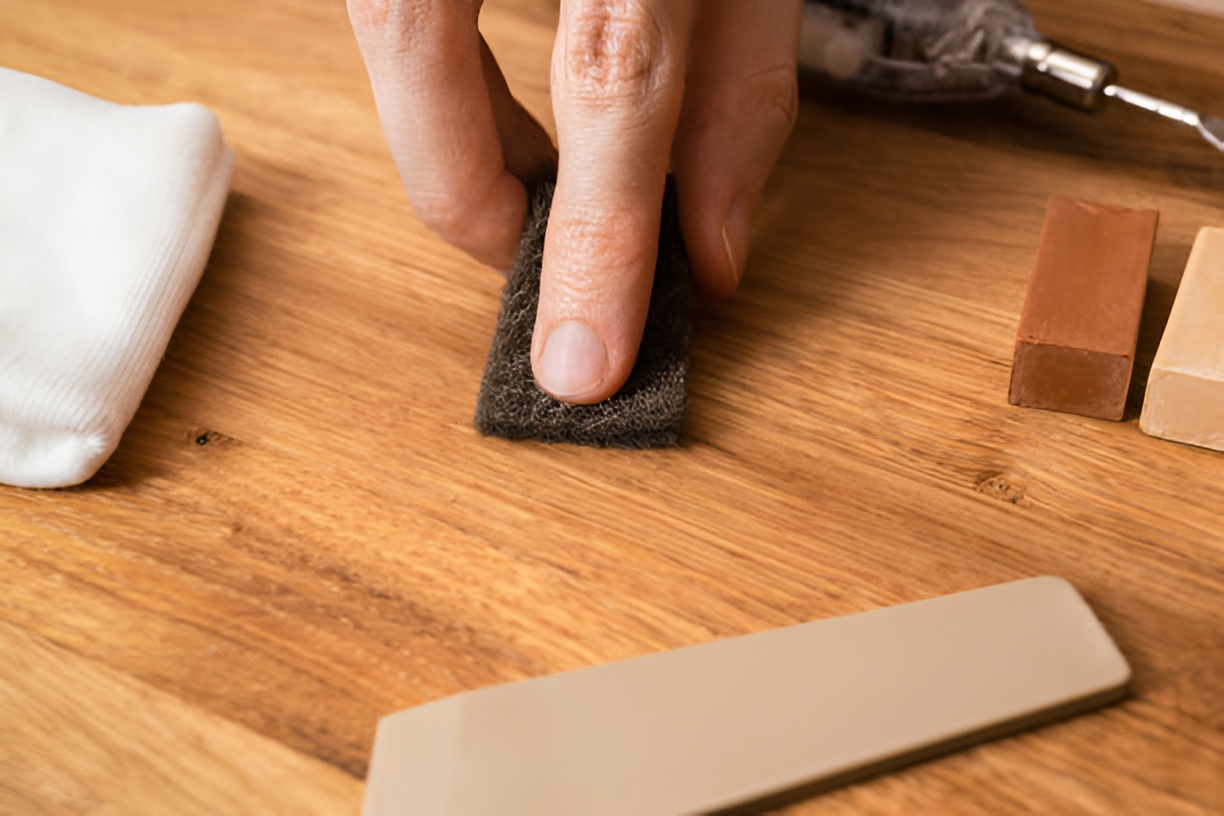
1. Use Laminate Floor Filler or Putty
- Clean the scratched area thoroughly
- Choose a filler or putty that matches your laminate’s color
- Apply with a putty knife and smooth evenly
- Allow it to dry completely, then lightly sand to blend with surrounding flooring
2. Consider Laminate Floor Replacement Planks
If a scratch is very deep or the board is cracked:
- Measure and remove the damaged plank
- Install a new matching plank
- Ensure the surrounding boards are properly aligned
- This method is more labor-intensive but restores your floor perfectly
3. Protect the Repaired Area
After repairing deep scratches, it’s wise to protect the area to prevent future damage:
- Use felt pads on furniture legs
- Place rugs in high-traffic areas
- Keep pet nails trimmed
Can You Prevent Laminate Floor Scratches?
Absolutely. Preventing scratches is often easier than fixing them. Some strategies include:
- Furniture pads: Place felt or rubber pads under chairs, tables, and heavy furniture
- Rugs and mats: Use area rugs in high-traffic zones and at entryways
- Regular cleaning: Sweep or vacuum to remove sand and dirt that can scratch the floor
- Pet care: Keep your pets’ nails trimmed to avoid accidental scratches
Preventive measures can dramatically extend the life and appearance of your laminate flooring.
How to Restore Shine After Scratch Repair
Even after repairing scratches, your floor might look a little dull. Here’s how to bring back its shine:
- Clean the floor with a laminate-safe cleaner
- Use a microfiber cloth or mop for buffing
- Apply a laminate polish or floor restorer sparingly for a subtle shine
- Avoid excessive water, as laminate can warp if overexposed to moisture
What Not to Do When Fixing Scratches
While many DIY methods are effective, some common mistakes can make things worse:
- Don’t use abrasive scrubbing pads
- Avoid excessive water or steam cleaners on laminate
- Don’t apply the wrong color filler or marker—always test on a hidden area first
- Don’t skip cleaning the scratch before applying a repair solution
Being careful ensures your repair lasts longer and looks seamless.
How to Decide Between DIY and Professional Repair
Sometimes scratches are too severe for home remedies. Consider professional help if:
- Scratches cover a large area
- The laminate is chipped or deeply gouged
- DIY repairs don’t match the floor color
- You want a perfect, long-lasting finish
A flooring professional can replace or repair planks efficiently and ensure the repair blends with the rest of your floor.
How Long Will Scratch Repairs Last?
With proper care, scratch repairs can last for years. Factors that affect longevity include:
- Floor usage and traffic
- Quality of repair materials
- Preventive maintenance practices
- Environmental conditions like humidity and sunlight exposure
Regular cleaning and protection can keep your laminate floors looking new for a long time.
Can Scratches on Laminate Flooring Affect Home Value?
While small scratches usually aren’t a major concern, visible damage can:
- Make your home look less well-maintained
- Reduce the appeal to potential buyers
- Lower the perceived value of your flooring
Fixing scratches not only improves the look of your home but can also protect your investment.
Quick Tips for Everyday Laminate Floor Care
- Sweep or vacuum regularly
- Wipe up spills immediately
- Avoid dragging heavy furniture
- Use floor mats at entrances
- Check and maintain furniture pads periodically
These simple practices prevent scratches and reduce the need for frequent repairs.
Closing Thoughts: Keeping Laminate Floors Scratch-Free
Laminate floors are durable and stylish, but scratches are inevitable. The good news is that with the right approach, both light and deep scratches can be effectively repaired. From quick DIY fixes using household items to professional-level repair solutions, there’s a method for every situation. Combined with preventive care, your laminate floors can stay looking beautiful for years to come.