
Embarking on a major home improvement project is one of the most rewarding endeavors a homeowner can undertake. Whether your goal is to modernize an aging layout, lower monthly utility overhead, or adapt your living space to a growing family, a successful renovation breathes new life into your property. However, turning design ideas into a structurally sound, beautifully finished reality requires far more than picking out paint colors and appliance finishes. It demands a methodical approach grounded in detailed planning, precise trade sequencing, and proactive structural maintenance.
A successful home transformation considers the building as an interconnected system. Major cosmetic upgrades rely on the strength of the home’s underlying structural, electrical, mechanical, and plumbing networks. When you prioritize essential building envelope repairs and utility updates before applying decorative finishes, you protect your financial investment from hidden leaks, electrical hazards, and climate control inefficiencies. By establishing clear project goals, evaluating underlying site conditions, and partnering with certified trade specialists, you can navigate the renovation process smoothly and create a safe, comfortable, and valuable home that serves your family for generations.
Start With a Clear Plan and Realistic Priorities

Every successful residential renovation begins long before physical construction starts on-site. Without a well-defined scope of work and clear financial parameters, even modest home improvement efforts can suffer from scope creep, unexpected budget overruns, and frustrating timeline delays. Take time up front to evaluate your property’s primary limitations. Are you struggling with cramped spatial flow, outdated fixtures, structural wear, or inefficient climate control? Categorizing your project needs into “essential structural requirements” and “desired aesthetic preferences” helps establish a realistic project roadmap.
Establishing clear priorities early allows you to coordinate with the right trade specialists and secure necessary municipal permits without costly rework. Partnering with professional general contracting services provides the centralized leadership needed to translate your design goals into an actionable construction schedule. Experienced contractors manage material procurement, coordinate specialized sub-contractors, enforce job-site safety standards, and navigate unexpected structural challenges without compromising your timeline or budget. Establishing a clear plan and working under experienced oversight provides a solid foundation for your entire home improvement journey.
Address Exterior Damage Before It Becomes More Serious
One of the most critical rules of home improvement planning is to secure the building envelope from the top down before investing in interior cosmetic upgrades. Investing heavily in new kitchen cabinetry, custom bathroom tile, or hardwood flooring is a major financial risk if your roof is nearing the end of its operational life or suffering from hidden storm damage. A minor, undetected roof leak allows rainwater to migrate through attic insulation, rot structural timber framing, and ruin brand-new interior drywall within a single heavy storm.
Comprehensive building envelope care relies on regular inspections, prompt flash sealing, and timely shingle repairs. Enlisting a dedicated roof repair service guarantees that certified technicians climb onto the structure to evaluate chimney flashings, check ridge ventilation, clear valley debris, and replace compromised shingles before leaks occur. Resolving minor shingle loss or flashing degradation prevents structural timber rot, keeps attic insulation dry, and protects your interior living spaces from sudden water damage. Securing your roof from the top down protects every dollar invested inside your home.
Improve Comfort and Efficiency Throughout the Home
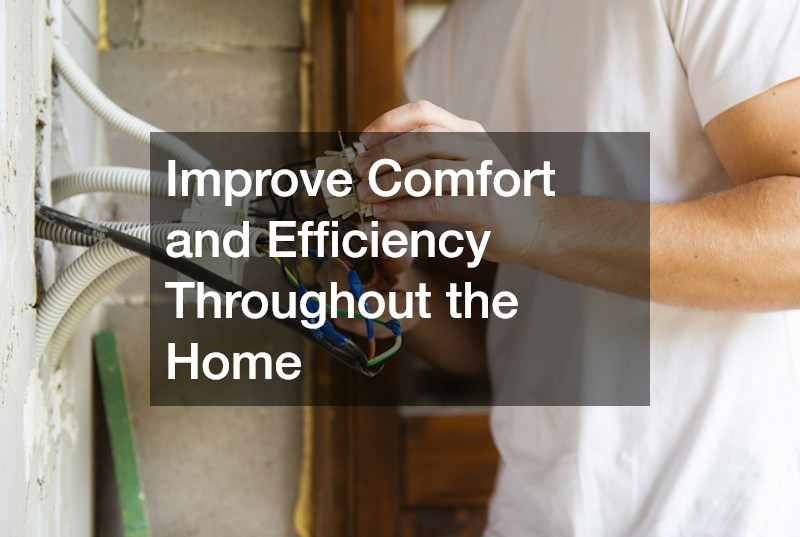
Achieving ideal indoor climate control is essential for maintaining a healthy, comfortable living environment across changing seasons. Traditional, aging climate control systems often struggle to maintain consistent temperatures, resulting in frustrating hot and cold spots, excessive indoor humidity, and high utility bills. Furthermore, as heating and cooling equipment ages, blowers lose efficiency, coils collect airborne debris, and moving parts suffer mechanical wear, raising the risk of sudden equipment failure during peak summer or winter weather.
Upgrading your climate control infrastructure or scheduling comprehensive system maintenance improves daily indoor air comfort while drastically cutting energy consumption. Utilizing licensed HVAC services allows certified technicians to inspect airflow ductwork, calibrate smart thermostats, balance supply registers, and clean condenser coils. Modern high-efficiency heat pumps and variable-speed furnaces adjust thermal output dynamically, eliminating draft zones and capturing airborne allergens through advanced media filtration. Upgrading your heating and cooling equipment delivers quiet operational performance, maintains balanced indoor humidity, and slashes monthly utility expenses.
Replace Aging Features That Affect Performance
Windows serve as critical touchpoints in residential architecture, allowing natural daylight and fresh air into your living spaces while defining your home’s exterior elevation. However, as window units age, double-pane seals break down, causing thermal insulating gas to escape and moisture to condense between glass panes. Foggy glass, rot around wooden window frames, and drafty sills force your heating and cooling equipment to run continuously, driving up energy costs and creating uncomfortable indoor draft zones.
Engaging expert specialists for a complete window replacement restores the thermal integrity and visual appeal of your building envelope. Modern double or triple-pane replacement windows featuring Low-E glass coatings, argon gas fills, and insulated vinyl or composite frames block solar heat gain in summer while keeping warm air inside during winter. Certified window installers ensure exact frame flashing and draft-free sealing, blocking outdoor street noise and preventing water infiltration around window openings. Upgrading aging windows transforms dark, drafty interiors into quiet, energy-efficient living spaces that look clean and modern from the curb.
Work With Experienced Professionals for Major System Upgrades

As home improvement plans expand to include multi-room renovations, room additions, or whole-house overhauls, the complexity of underlying mechanical infrastructure increases exponentially. Sizing new heating and cooling units, reconfiguring complex ductwork networks, or integrating multi-zone climate controls requires deep thermodynamic knowledge and precise load calculations. Attempting DIY installations or relying on uncertified labor for major mechanical systems often leads to undersized equipment, poor air distribution, elevated energy bills, and premature system failure.
Entrusting major climate control renovations to an established, certified HVAC company ensures that your new mechanical equipment is engineered specifically for your home’s layout and square footage. Professional technicians perform precise Manual J heat load calculations, evaluating insulation levels, window orientation, and ceiling heights before recommending equipment. Licensed HVAC specialists also handle refrigerant line charging, high-voltage electrical connections, and ductwork balancing according to strict local building codes. Working with proven mechanical professionals guarantees reliable system performance, low operational noise, and long-term warranty protection for your climate control investment.
Restore the Property Safely After Unexpected Damage
Home improvement projects are not always driven by planned aesthetic updates; sometimes, they are necessitated by sudden property disasters. A localized kitchen grease fire, an electrical appliance short, or a chimney fire can leave behind structural charring, toxic smoke residue, and corrosive soot. Even after open flames are extinguished, acidic soot residue continues to pit, stain, and corrode metal fixtures, quartz countertops, and glass surfaces if not chemically neutralized by trained professionals.
Recovering safely from fire trauma requires specialized chemical cleaning, structural shoring, and advanced air purification methods. Partnering with a certified fire damage restoration service guarantees that trained technicians enter the property immediately to remove charred structural materials, neutralize acidic soot, and seal exposed timber framing. Restoration teams utilize industrial HEPA air scrubbers, thermal fogging units, and ozone generators to extract deeply embedded smoke odor from wall cavities and concrete slabs. Professional fire restoration stabilizes your living environment, halts chemical corrosion, and prepares your property for safe, complete reconstruction.
Prevent Water Problems With Reliable System Maintenance

Water supply lines and waste removal networks operate mostly out of sight behind drywall, under subfloors, and beneath foundation slabs. Because these pipes are hidden, subtle pinhole leaks, slow drain lines, and joint corrosion often develop quietly over time. A tiny, undetected water leak can release thousands of gallons of water into wall cavities and subfloors, causing structural timber rot, subfloor warping, and dangerous mold growth long before visible stains appear on interior drywall surfaces.
Partnering with licensed plumbing contractors for routine system inspections and drain clearing ensures that minor plumbing defects are resolved before causing major structural water damage. Experienced plumbers use electronic leak detectors, pressure gauges, and high-definition video pipe cameras to inspect line integrity, clear stubborn drain blockages, and replace corroded copper or galvanized pipes. Proactive plumbing maintenance protects your subfloors from water rot, maintains clean waste lines, and ensures reliable water pressure across all household fixtures.
Keep the Home Safe With Updated Power Systems
Modern households rely on a wide range of electronic devices, smart appliances, high-capacity climate control systems, and electric vehicle chargers that older electrical infrastructure was never designed to support safely. Running high-demand modern technology through aging electrical panels, knob-and-tube wiring, or ungrounded circuits creates severe fire risks, causes frequent breaker trips, and damages sensitive electronics through sudden power surges.
Scheduling regular safety audits and system updates with certified electrical services ensures your electrical grid is safe, efficient, and fully code-compliant. Experienced electricians can upgrade outdated 100-amp service panels to modern 200-amp or 400-amp capacity, install dedicated circuits for high-draw appliances, add Arc Fault (AFCI) and Ground Fault (GFCI) protection, and set up whole-home surge suppression. Modernizing your electrical infrastructure eliminates hidden fire hazards, protects expensive electronics from voltage spikes, and ensures your home can safely support current and future power demands.
Maintain Consistent Temperatures in Every Season
Achieving true thermal comfort across changing seasons requires intelligent temperature control strategies that adapt dynamically to your family’s daily routines. Operating heating and cooling equipment on static, manual settings leads to immense energy waste, as systems run at full capacity while living spaces sit empty during workday hours. Modern smart home upgrades fine-tune climate parameters automatically, maximizing energy conservation without sacrificing personal comfort when you are at home.
Partnering with a reliable heating and cooling service allows you to integrate smart programmable thermostats, wireless room sensors, and automated zone dampers into your HVAC network. Smart thermostats learn your household schedules and leverage real-time weather forecasts to optimize heating and cooling cycles automatically. These systems can drop indoor temperatures slightly during winter nights or adjust cooling output while you are at work, lowering energy consumption significantly over the course of a year. Precision temperature management eliminates energy waste, delivers perfectly balanced indoor temperatures, and provides detailed energy analytics directly to your smartphone.
Check for Hidden Problems Before Starting Renovations
Before breaking ground on major interior renovations, tearing down walls, or closing up subfloors, it is essential to inspect the property for hidden environmental hazards. Whenever past roof leaks, plumbing drips, or high basement humidity are left unaddressed for more than 24 to 48 hours, microscopic mold spores germinate on organic building materials like drywall paper, wood framing, and carpet padding. Disturbing hidden mold colonies during demolition without containment spreads microscopic spores throughout your home’s air duct network, creating severe indoor air contamination and health risks for your family.
Conducting a professional mold inspection prior to starting demolition allows certified specialists to evaluate air quality and locate hidden moisture pockets using moisture meters and infrared thermal cameras. If mold contamination is discovered, certified technicians isolate the affected area using plastic containment barriers and negative-air HEPA filtration before physical construction begins. Remediating microbial growth at the source ensures that new drywall, cabinetry, and flooring are installed over clean, healthy structural framing. Pre-renovation environmental testing protects your family’s health, preserves indoor air quality, and ensures your newly remodeled living space is completely safe.
A successful home improvement project is built on detailed preparation, logical trade sequencing, and an unyielding commitment to structural and mechanical quality. By prioritizing essential building envelope repairs, electrical panel upgrades, plumbing checks, and climate control performance before applying decorative finishes, you establish a resilient foundation that protects your financial investment. Each strategic update works in harmony with your home’s architecture, turning an aging property into an efficient, beautiful, and safe sanctuary.
Taking a structured, quality-focused approach to home care delivers significant long-term dividends in reduced utility overhead, low maintenance stress, and expanded financial equity. Partnering with licensed trade specialists ensures that every structural modification, utility upgrade, and material application meets strict building codes and industry standards. By investing consistently in your home’s upkeep and modern performance, you ensure that your property remains a safe, energy-efficient, and beautiful sanctuary for decades to come.
The ultimate success of any residential transformation relies on viewing your property as a lifelong asset that deserves expert care and quality craftsmanship. Staying ahead of physical wear, addressing hidden site hazards, and modernizing interior and exterior spaces protects your building envelope against time and environmental wear alike. A home built on regular professional upgrades, reliable utility infrastructure, and thoughtful design provides an unmatched environment of safety, financial security, and personal pride for you and your family.